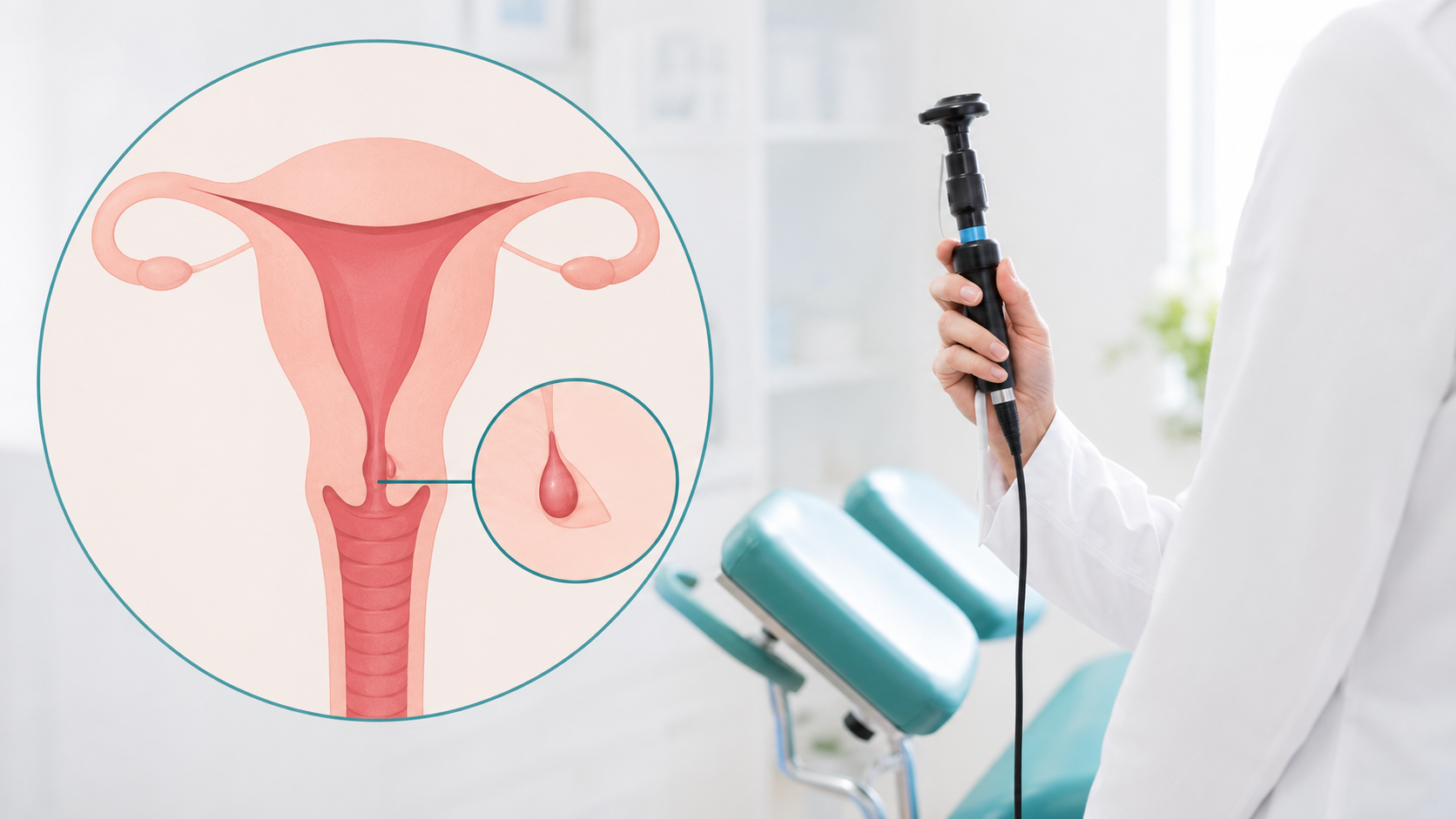
Preventing Cervical Cancer with Conization Surgery
Cervical cancer is one of the most preventable cancers when detected early through screening and timely intervention. One of the most critical steps in prevention is conization surgery, performed when abnormal cellular changes (dysplasia/CIN) are detected. Conization involves removing a cone-shaped piece of tissue from the transformation zone of the cervix, effectively eliminating precancerous lesions. The increasing role of HPV testing, risk-based follow-up, and targeted approaches for suitable patients have further strengthened the value of this operation. The World Health Organization (WHO) recommends HPV-based screening as a priority, carried out at regular intervals. This strategy enables early detection of high-risk lesions and their effective surgical removal, preventing progression to cancer.
What Is Conization?
Conization is the removal of a cone-shaped piece of tissue from the cervix. This specimen includes both the abnormal cells and surrounding “clean” margins. Once removed, the tissue is sent for pathological examination, allowing:
- Determination of the grade of the lesion (CIN1, CIN2, CIN3, AIS, etc.),
- Assessment of whether the surgical margins are clear,
- Planning of further treatment or establishing a follow-up strategy if needed.
Conization can be performed for both diagnostic purposes (in cases of unclear or discordant cytology–biopsy results) and therapeutic purposes (excision of high-grade lesions such as CIN2–3 or AIS).
When Is Conization Performed?
Not every abnormal result requires conization. A modern risk-based approach takes into account the patient’s age, HPV type, cytology findings, colposcopy results, and history. In general:
- CIN2–CIN3 (high-grade squamous intraepithelial lesions/HSIL) require excisional treatment (LEEP/LLETZ or cold knife conization).
- AIS (adenocarcinoma in situ): Cold knife conization is often preferred; further surgery may be considered depending on fertility plans.
- Borderline or discordant cytology–colposcopy cases may require diagnostic conization.
- Low-risk minor abnormalities: Sometimes close follow-up with HPV testing is sufficient.
This risk-based model helps avoid overtreatment while ensuring precancerous lesions are safely identified and managed.
Conization Methods: LEEP/LLETZ and Cold Knife
Conization can be performed by two main techniques:
- LEEP/LLETZ (Loop Electrosurgical Excision Procedure): A thin wire loop with electric current is used to remove the lesion. It is the most common technique, can often be performed under local anesthesia in an outpatient setting, and allows fast recovery.
- Cold Knife Conization: The lesion is removed using a scalpel. Because there is no thermal damage, surgical margins can be assessed more clearly under the microscope. This method is often preferred in glandular lesions such as AIS.
The choice between the two depends on factors such as lesion type, depth, fertility considerations, and the need for precise margin evaluation. Studies have shown a small but significant increase in obstetric risks (such as preterm birth) after LEEP/LLETZ; therefore, treatment decisions should be individualized.
Preoperative Preparation
- Evaluation: Review of Pap smear/HPV results, colposcopy findings, and prior biopsies.
- Timing: Performed during a phase of minimal menstrual bleeding.
- Anesthesia: Local or general anesthesia may be used.
- Informed consent: The procedure, its benefits, risks, and follow-up plan are explained to the patient.
How Is the Surgery Performed? (Step by Step)
- Position and preparation: The patient is placed in lithotomy position; antiseptic preparation is performed.
- Exposure: The cervix is visualized with a speculum; colposcopic guidance may be used.
- Excision: A cone-shaped specimen including the lesion and transformation zone is removed.
- Hemostasis: Bleeding is controlled using electrocautery, hemostatic agents, or occasionally sutures.
- Specimen marking: Orientation marks (e.g., clock-face) are placed for pathology assessment.
- Recovery: Short observation, often same-day discharge.
The procedure usually takes 15–30 minutes, depending on the clinical setting.
Advantages of Conization
- Dual benefit: Provides both diagnosis and treatment.
- Organ-preserving: The uterus is preserved; fertility is usually maintained.
- High effectiveness: Removes CIN2–3 lesions comprehensively, reducing recurrence risk.
- Quick recovery: Minimally invasive techniques enable early return to daily life.
Risks and Possible Complications
Conization is generally safe but carries some risks:
- Bleeding: Early or delayed (e.g., when the scab falls off around 1–2 weeks post-op).
- Infection: Rare; may present with abnormal discharge, odor, or fever.
- Cervical stenosis: Narrowing of the cervix, occasionally affecting menstruation or fertility.
- Obstetric risks: Slightly increased risk of late miscarriage and preterm birth, especially with larger or deeper excisions.
Fertility and Pregnancy Considerations
Conization does not equal infertility. Most women can conceive and carry pregnancies after the procedure. However:
- Shortened cervical length may slightly increase the risk of preterm delivery.
- In women where >10–15 mm of tissue is excised, cervical length monitoring during pregnancy is recommended. Interventions such as progesterone therapy or cerclage may be considered if necessary.
- Complete removal of the lesion and HPV clearance are essential for long-term oncological safety.
Treatment should be carefully tailored for women of childbearing age to balance fertility preservation with oncologic safety.
Pathology Report: Margins and Next Steps
The pathology report provides essential information:
- Lesion grade: CIN1–3, AIS, presence/absence of invasion, lymphovascular invasion.
- Surgical margins: Negative, positive, or indeterminate.
- Thermal artifact: May obscure margin evaluation in LEEP/LLETZ specimens.
Follow-up: Current guidelines recommend HPV-based testing after conization. Depending on results at 12 months, colposcopy or extended follow-up may be planned. Positive margins alone do not automatically require repeat surgery—HPV persistence and overall risk are key considerations.
Postoperative Recovery and Care
Mild cramps and discomfort are common in the first days. Light bleeding or discharge may continue for 2–4 weeks. Recommendations:
- Avoid sexual intercourse, tampons, and douching for about 4 weeks (or as advised by the doctor).
- Avoid heavy lifting and intense exercise in the first 1–2 weeks.
- Avoid swimming pools or baths early on due to bleeding/infection risk.
- Seek urgent care if experiencing heavy bleeding (soaking pads hourly), foul-smelling discharge, fever >38°C, or severe pain.
Conization and HPV Vaccination: A Two-Pronged Protection
Conization removes the current lesion but does not prevent reinfection or future lesions. For this reason, HPV vaccination is an important additional protective measure:
- Routine vaccination is recommended at ages 11–12 (as early as 9).
- Unvaccinated individuals aged 13–26 are also advised to receive the vaccine.
- For ages 27–45, the decision is individualized based on risk–benefit assessment.
- The vaccine reduces the risk of multiple HPV-related cancers, including cervical, anal, and oropharyngeal cancers.
Vaccination after surgery may also help reduce recurrence risk.
Follow-Up After Conization: When and How?
- First year: HPV-based test at around 12 months; colposcopy if results are abnormal.
- Long-term: If consecutive HPV tests are negative, intervals may be extended.
- High-risk HPV types (16/18): Require closer surveillance and earlier colposcopy.
Common Myths and Misconceptions
- “Conization causes infertility.” False. Fertility is usually preserved; pregnancy risks are manageable with monitoring.
- “I had the HPV vaccine, I don’t need screening.” False. Vaccination does not replace cervical cancer screening.
- “Positive margins always require repeat surgery.” Not always. Risk-based follow-up is now the standard approach.
When to Seek Immediate Medical Help?
- Heavy vaginal bleeding (soaking pads within an hour),
- Fever and foul-smelling discharge,
- Severe abdominal pain or fainting,
- Suspected pregnancy with new symptoms.
Summary: Why Conization?
- Prevents progression of high-grade precancerous lesions to invasive cancer.
- Effective and uterus-preserving surgical approach.
- Decisions are tailored using up-to-date, risk-based guidelines.
- With proper aftercare and HPV vaccination, it provides long-term protection.
Frequently Asked Questions (FAQ)
1) Will conization affect my fertility?
In most cases, no. Most women can become pregnant afterward. There is a small increase in preterm birth risk, but this can be managed with monitoring and preventive measures.
2) Which is better: LEEP or cold knife conization?
It depends on lesion type, depth, suspicion of glandular disease, and fertility goals. LEEP is most common for HSIL/CIN2–3; cold knife is preferred for AIS.
3) How long does the procedure take? Can I go home the same day?
Usually 15–30 minutes. Most patients are discharged the same day.
4) How long should I avoid sexual activity?
Around 4 weeks. Tampons and vaginal douching should also be avoided.
5) Is bleeding normal after surgery?
Yes, light bleeding or discharge for 2–4 weeks is common. Heavy bleeding requires medical attention.
6) Do I still need screening if I am vaccinated?
Yes. HPV vaccination does not eliminate the need for regular screening.
7) What if my pathology margins are positive?
It does not always mean repeat surgery. Follow-up with HPV testing and risk evaluation is key.
8) When can I return to work?
Usually within 1–2 weeks for desk jobs; longer for physically demanding jobs.
9) Can conization be done during pregnancy?
Only in very limited cases, such as suspicion of invasive cancer. Otherwise, treatment is usually postponed until after delivery.
10) Does conization completely prevent cancer?
It significantly reduces the risk but requires continued follow-up and HPV vaccination for maximum protection.
Conclusion
Cervical cancer is one of the most significant threats to women’s health, yet it is largely preventable through regular screening and appropriate treatment. Conization surgery plays a critical role in detecting and removing precancerous lesions early, protecting both quality of life and fertility.
While the idea of surgery may cause anxiety, choosing the right physician, a reassuring approach, and thorough information can make the process much smoother. Conization not only treats existing lesions but also prevents future cancer development.
If your Pap smear results are abnormal, your HPV test is positive, or your doctor recommends conization, do not delay seeking care. Prof. Dr. Şadıman Kıykaç Altınbaş can guide you with personalized care and extensive experience throughout the process.Remember: women’s health is best protected through regular follow-up and early intervention. For more information and to schedule an appointment, visit: