
Blog
Blog

What Is Genital Aesthetics? Which Procedures Does It Include and Who Is It Suitable For?
Genital aesthetics is a general term for procedures intended to support the appearance and comfort of the genital area and, in some cases, improve functional comfort. Although interest in this field has increased in recent years, the subject may still feel sensitive, private and surrounded by uncertainty for many people.

PCOS Is Now Referred to as PMOS: What Does This Change Mean for Women’s Health?
PCOS, or Polycystic Ovary Syndrome, which has long been one of the most frequently discussed hormonal conditions in women’s health, has now begun to be referred to by a more inclusive name in the international literature: PMOS — Polyendocrine Metabolic Ovarian Syndrome.
What Are Genital Infections? What Are Their Symptoms and Causes, and What Should the Treatment Approach Be?
Genital infections are among the most common health problems and may affect the vagina, vulva, cervix and, in some cases, the urinary tract or pelvic region. Although many people associate this subject only with vaginal discharge, the condition may also be accompanied by various symptoms such as itching, burning, an unpleasant odour, irritation, pain during sexual intercourse, stinging during urination and discomfort in the groin area.
Preventing Cervical Cancer with Conization Surgery
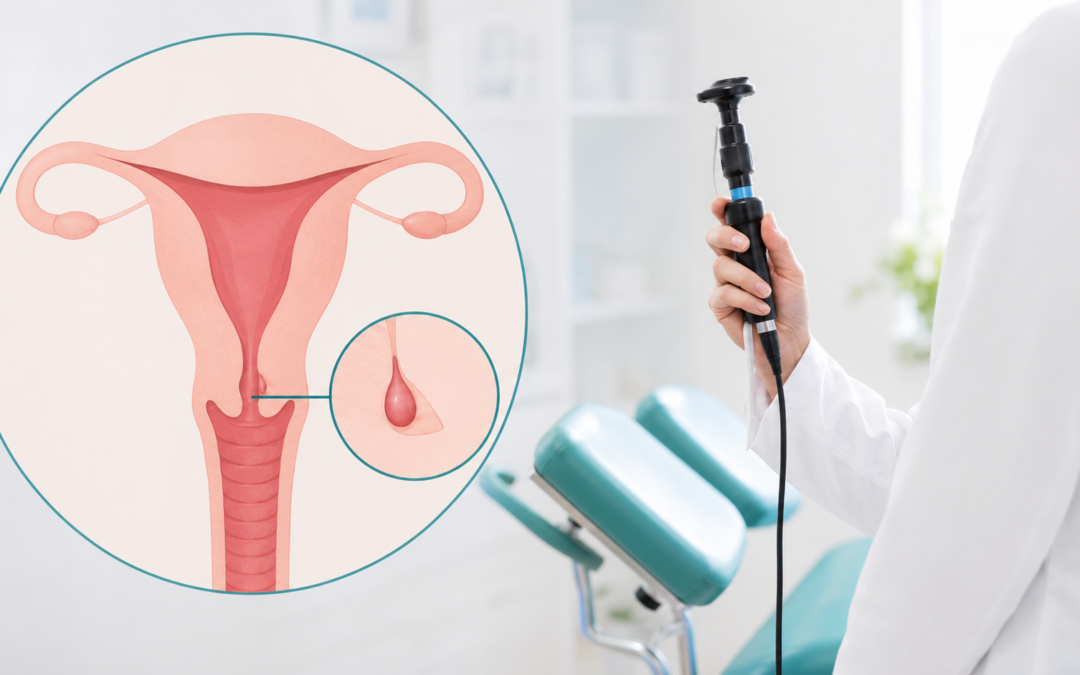
Cervical cancer is one of the most preventable cancers when detected early through screening and timely intervention. One of the most critical steps in prevention is conization surgery, performed when abnormal cellular changes (dysplasia/CIN) are detected. Conization involves removing a cone-shaped piece of tissue from the transformation zone of the cervix, effectively eliminating precancerous lesions. The increasing role of HPV testing, risk-based follow-up, and targeted approaches for suitable patients have further strengthened th

What Is a Retropubic Sling (TVT – Midurethral Sling)?
In this comprehensive guide, you can read what TVT is, who it is suitable for, the surgical process, its success, potential risks, and the recovery period—presented in a patient-friendly but scientifically grounded language, reflecting the shared perspective of clinical practice. However, it should be remembered that in a lady with urinary incontinence, the first choice should always be non-surgical solutions such as lifestyle modifications and Kegel exercises. In cases where these solutions do not yield results, surgery will come onto our agenda as the next step in treatment.

What Is Vaginal Yeast Infection (Vulvovaginal Candidiasis)?
Vaginal itching, burning, white discharge, tenderness during intercourse… Many women encounter these complaints at least once in their lives. One of the most common causes of these symptoms is a vaginal yeast infection—medically termed vulvovaginal candidiasis.
Although it is very common in daily clinical practice, vaginal yeast infection remains one of the most misunderstood gynecologic topics.

Vulvar Cancer
Vulvar cancer is one of the rare yet clinically highly significant gynecologic malignancies that develops in the female external genital region. The vulva (external genitalia) includes the labia majora, labia minora, clitoris, and the surrounding skin and soft tissues of these structures. Cancers arising in this area generally progress slowly; however, when not recognized in the early period, both the treatment process may become more challenging and outcomes that affect quality of life may occur.

Abdominal (Open) Hysterectomy: Open Uterus Removal Surgery
A hysterectomy is a surgical procedure that involves the removal of the uterus. It is a significant medical decision often considered due to persistent pain, heavy bleeding, or the risk of cancer. There are various surgical methods for performing a hysterectomy, with one of the most traditional being the abdominal (open) hysterectomy. In this approach, the uterus is removed through an incision made in the lower abdomen.
Why Is Vaginal Hysterectomy Preferred?
Vaginal hysterectomy is a surgical procedure that involves the complete removal of the uterus through the vagina, eliminating the need for an abdominal incision. During this procedure, incisions are made at both the upper and lower parts of the cervix, and the ligaments and blood vessels that support the uterus are carefully detached. Once the uterus is removed, the surrounding tissue is properly closed.

